
Photo: Wigdis Korsvik/ County Governor of Nordland
Cross-border cooperation is essential for societal security and civil preparedness in the High North. Northern Norway, Northern Sweden and Northern Finland share many common characteristics and challenges, including long distances, harsh climate, sparse populations and increasing strategic importance in a changing security environment.
To gain a clearer picture of how cross-border cooperation is organized today, and where there is potential for further development, the County Governor of Nordland and the County Governor of Troms and Finnmark, in cooperation with Swedish and Finnish partners, commissioned the report:
“Mapping of Cross-border Cooperation in the High North”.
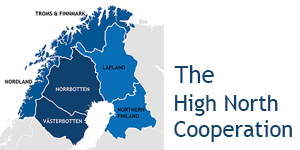
The report serves as a key knowledge base for the High North Civil Preparedness Forum (HNCPF), a three-year Interreg Aurora project led by High North Cooperation (LINK).
The report has been prepared by KPMG and is now publicly available.
Why was the report prepared?
The background for the report is a shared need for a common and up-to-date knowledge base on existing cross-border cooperation in the field of civil preparedness and societal security in the High North.
All three countries conduct risk and vulnerability assessments within their own national borders. At the same time, many of the challenges facing the region are inherently cross-border and cannot be effectively managed by one country alone.
The purpose of the mapping was to identify existing frameworks, initiatives and forms of cooperation, and to provide an overview of how cooperation is distributed across sectors. It also aims to highlight overlaps and areas for improvement, and to establish a shared point of departure for further work in the region.
The report is not a joint risk and vulnerability assessment in itself, but a preparatory step for further analysis and development.
How was the work carried out?
The mapping is based on a survey targeting actors in Norway, Sweden and Finland, a review of relevant documents, agreements and analyses, and interviews with selected key stakeholders.