
This year’s course focused on NATO’s seventh baseline requirement for civil preparedness: Resilient civil transportation systems.
During two days in Norway, participants met for briefings, networking and workshops, sharing knowledge and experiences on how transportation systems could be strengthened across borders.
The course approached the topic from a comprehensive civil preparedness perspective, addressing areas such as security of supply, host nation support, medical transports, communication and information sharing.
Strengthening cross-border preparedness
Reliable transport systems are essential for maintaining critical societal functions during crises and for enabling the movement of military forces and resources across borders. In the High North, long distances, challenging geography and cross-border dependencies make cooperation between countries, authorities and sectors particularly important.
“No country can build resilience in the High North on its own. By bringing together stakeholders from Finland, Sweden and Norway, we strengthen our shared understanding of both the challenges and the opportunities for cross-border cooperation. ICC2026 gave us an important arena to learn from each other and build relationships that are valuable in both everyday preparedness and times of crisis,” said Linda Hällgren,project manager and crisis and contingency officer at the County Administration Board of Västerbotten, representing the organisers.
ICC2026 provided an opportunity for participants to deepen their understanding of civil preparedness in the High North and learn more about the preparedness systems and conditions in Finland, Sweden and Norway, with a particular focus on resilient transport systems.
Communication as part of resilience
Effective communication and timely information sharing are also essential for cross-border preparedness. During a crisis, stakeholders need a shared situational awareness and the ability to communicate quickly and consistently. The course also highlighted the importance of being prepared to identify and manage misleading or deliberately manipulated information that could create uncertainty and undermine trust.
These issues are also addressed within the High North Civil Preparedness Forum, where Finland, Sweden and Norway are working together to increase knowledge and develop a joint approach to countering information influence.
Learning from each other
Participants represented organisations at municipal, regional and national levels, including municipalities, rescue services, healthcare authorities, armed forces, police, and private sector representatives.
An important part of the course was the opportunity to exchange experiences and discuss practical challenges together with colleagues from neighbouring countries.
“Meeting colleagues from across the borders and discussing concrete challenges gave us new perspectives on our own preparedness. It also became clear how important communication and information sharing are. During a crisis, we need not only functioning transport routes, but also trusted channels, a shared situational awareness and the ability to communicate quickly and consistently across borders,” said Odd-Hugo Pedersen, regional director at Norwegian Road Transport Association, one of the participants.
Building knowledge and networks across borders
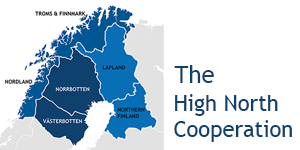
The International Cooperation Courses are organised within the High North Cooperation for key stakeholders in northern Finland, Sweden and Norway. Each year, the course focuses on one of NATO’s seven baseline requirements for civil preparedness.
By bringing together participants from the three countries, ICC2026 contributed to increased knowledge, stronger professional networks and continued cross-border cooperation on civil preparedness in the High North.
The course also highlighted how transport, communication, information sharing and resilience against information influence are interconnected. Strengthening these capabilities across borders is an important part of preparing the High North to manage future crises and disruptions.
About the High North Civil Preparedness Forum
The High North Civil Preparedness Forum is a three-year, EU-funded, Interreg Aurora project lead by the High North Cooperation. The project aims to strengthen interregional collaboration within civil preparedness in northern Finland, Sweden and Norway. The target groups for the project’s activities are key civil preparedness stakeholders in the in the region, such as municipalities, agencies, and volunteer organisations.